REDESIGNING A DATA-DRIVEN DASHBOARD FOR REAL ESTATE OPERATIONS
Redesigned a CRM dashboard to help land investment teams monitor performance, track transactions, and make faster operational decisions based on clearer business insights. Pebble is a SaaS CRM platform used by land investment companies across the United States. As the product grew, the dashboard became one of the key areas where users needed clearer visibility into operational performance, transaction progress, and campaign outcomes. My role was to research user needs, identify reporting gaps, and redesign the dashboard into a more actionable workspace for daily decision-making.
Year
2023-2026
Field
Real Estate
Client :
PebbleRei
Category
Product Design

THE CHALLENGE
The existing dashboard was underused because it did not clearly support users' day-to-day decision-making. Key information was difficult to scan, important metrics were missing, and many teams still relied on external spreadsheets to monitor performance and transactions.
The challenge was to understand what information users actually needed and turn the dashboard into a more useful operational workspace.
Dashboard Research & Discovery
To define the redesign direction, I analyzed user feedback, reviewed spreadsheet-based reporting habits, and mapped recurring dashboard needs shared by different teams.
The research helped identify which metrics were truly useful, which information was missing, and how users expected to monitor performance inside the product instead of switching between external tools.
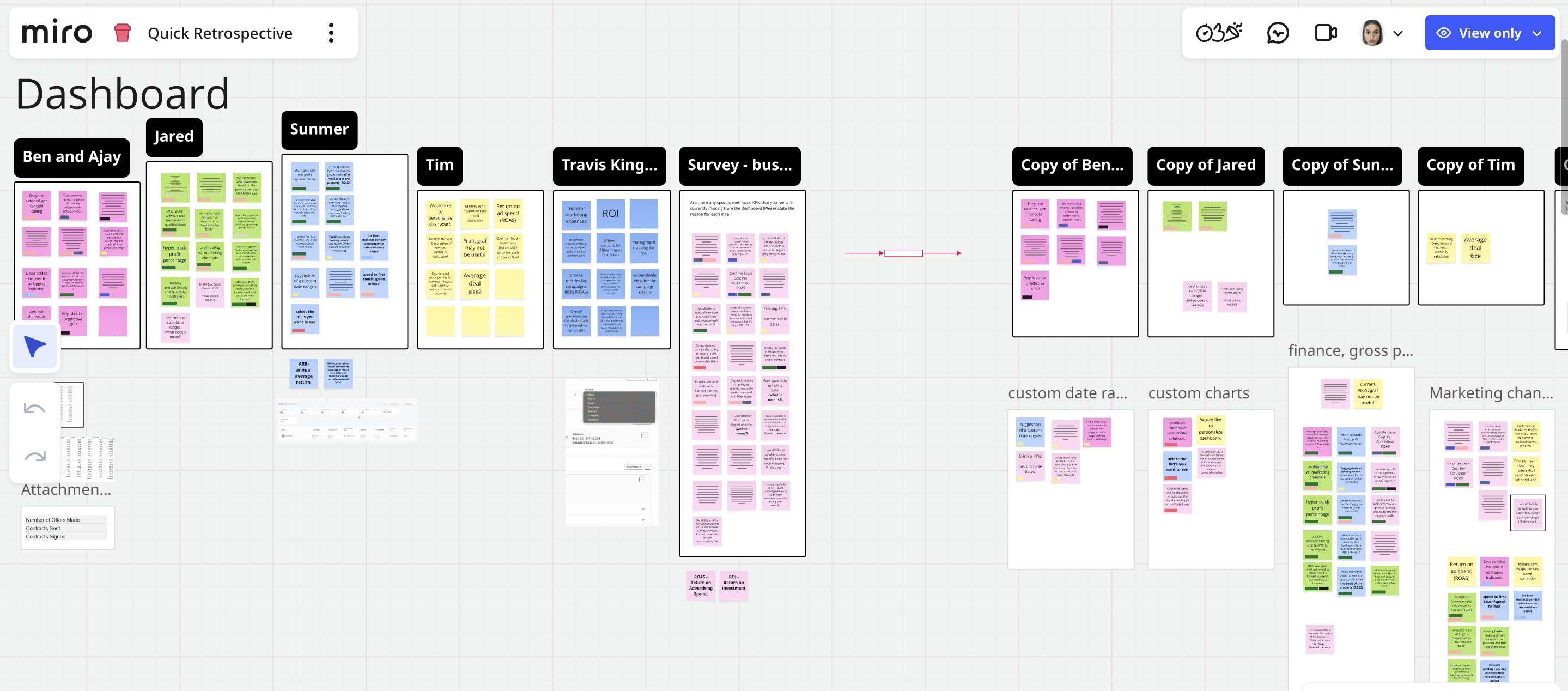
KEY FINDINGS:
Important transaction data was difficult to monitor from the existing dashboard.
The previous dashboard lacked prioritization and clear information hierarchy.
Different teams needed visibility into campaign performance, calls, deals, revenue, and ROI.
Users wanted faster access to actionable insights rather than passive reporting.
Over three years, I led or contributed to multiple initiatives designed to improve operational efficiency and product adoption.
Dashboard Redesign
Transformed reporting views into actionable operational workspaces with clearer prioritization and visibility.
Workflow Optimization
Reduced friction across acquisition and transaction management processes.
Onboarding Improvements
Designed guided experiences helping new users reach value faster.
Automation Features
Introduced tools that reduced repetitive manual work and improved operational consistency.
AI-Powered Experiences
Explored conversational AI and workflow automation opportunities within the platform.
DASHBOARD REDESIGN
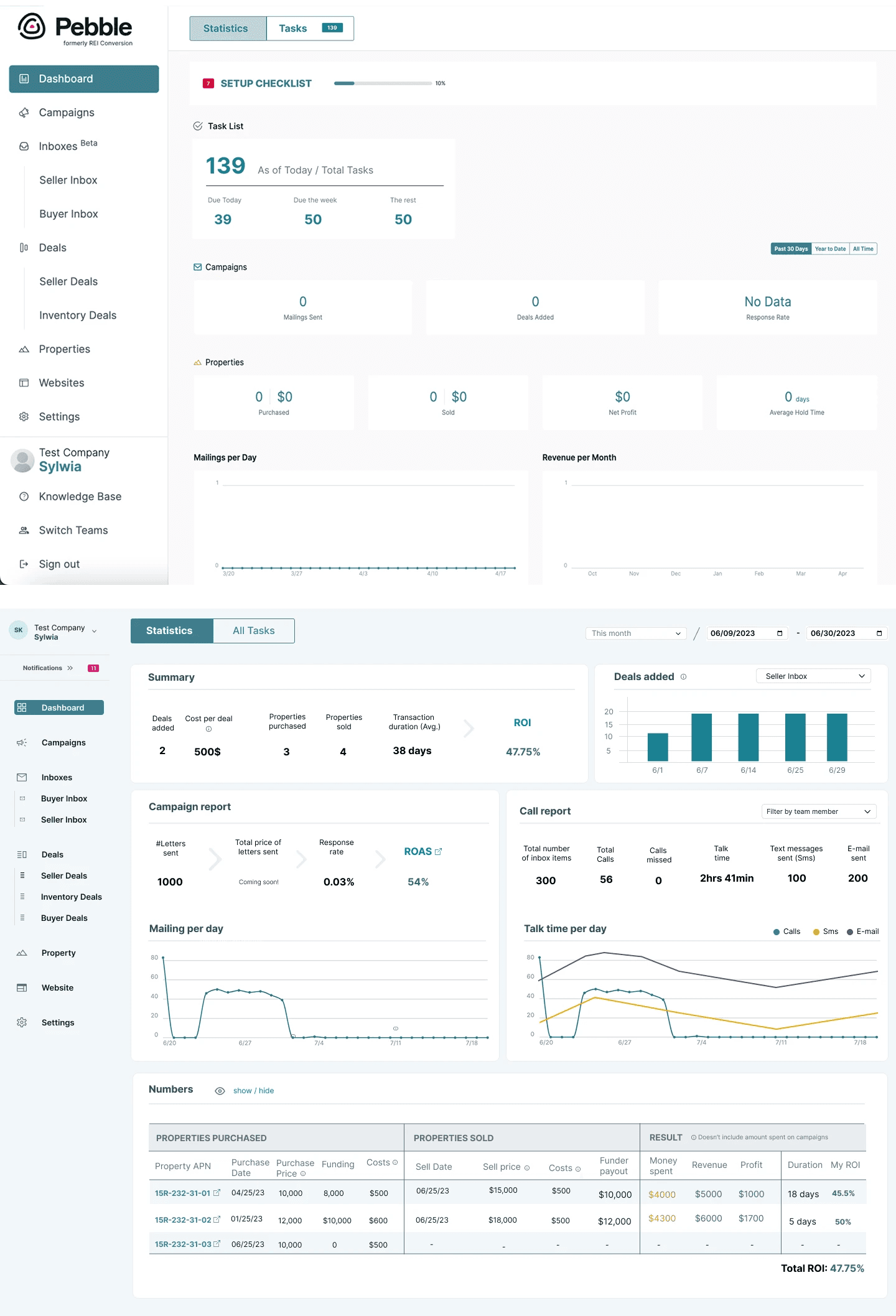
Based on research findings, I redesigned the dashboard around the most important operational questions users needed to answer daily: how campaigns were performing, how many deals were moving through the pipeline, which transactions required attention, and whether business activity was generating return on investment.
The new structure grouped related information into clearer sections and made the dashboard more useful for monitoring, prioritization, and decision-making.
BEFORE vs AFTER STATE
Challenge | Design Decision |
|---|---|
Information overload | Simplified hierarchy and surfaced key metrics |
Poor visibility | Introduced actionable tracking mechanisms |
Manual monitoring | Added workflow-oriented reporting |
Multiple user needs | Created flexible dashboard structures |
IMPACT
The success was measured through adoption: redesigns improved usability, reduced friction across key workflows, and created a stronger foundation for future product growth.
KEY PRODUCT INITIATIVES - BROADER CONTEXT
Over three years, I led or contributed to multiple initiatives designed to improve operational efficiency and product adoption.
Dashboard Redesign
Transformed reporting views into actionable operational workspaces with clearer prioritization and visibility.
Workflow Optimization
Reduced friction across acquisition and transaction management processes.
Onboarding Improvements
Designed guided experiences helping new users reach value faster.
Automation Features
Introduced tools that reduced repetitive manual work and improved operational consistency.
AI-Powered Experiences
Explored conversational AI and workflow automation opportunities within the platform.
DASHBOARD REDESIGN
Based on research findings, I redesigned the dashboard around the most important operational questions users needed to answer daily: how campaigns were performing, how many deals were moving through the pipeline, which transactions required attention, and whether business activity was generating return on investment.
The new structure grouped related information into clearer sections and made the dashboard more useful for monitoring, prioritization, and decision-making.
BEFORE vs AFTER STATE
Challenge | Design Decision |
|---|---|
Information overload | Simplified hierarchy and surfaced key metrics |
Poor visibility | Introduced actionable tracking mechanisms |
Manual monitoring | Added workflow-oriented reporting |
Multiple user needs | Created flexible dashboard structures |
IMPACT
The success was measured through adoption: redesigns improved usability, reduced friction across key workflows, and created a stronger foundation for future product growth.
More Projects
More Projects


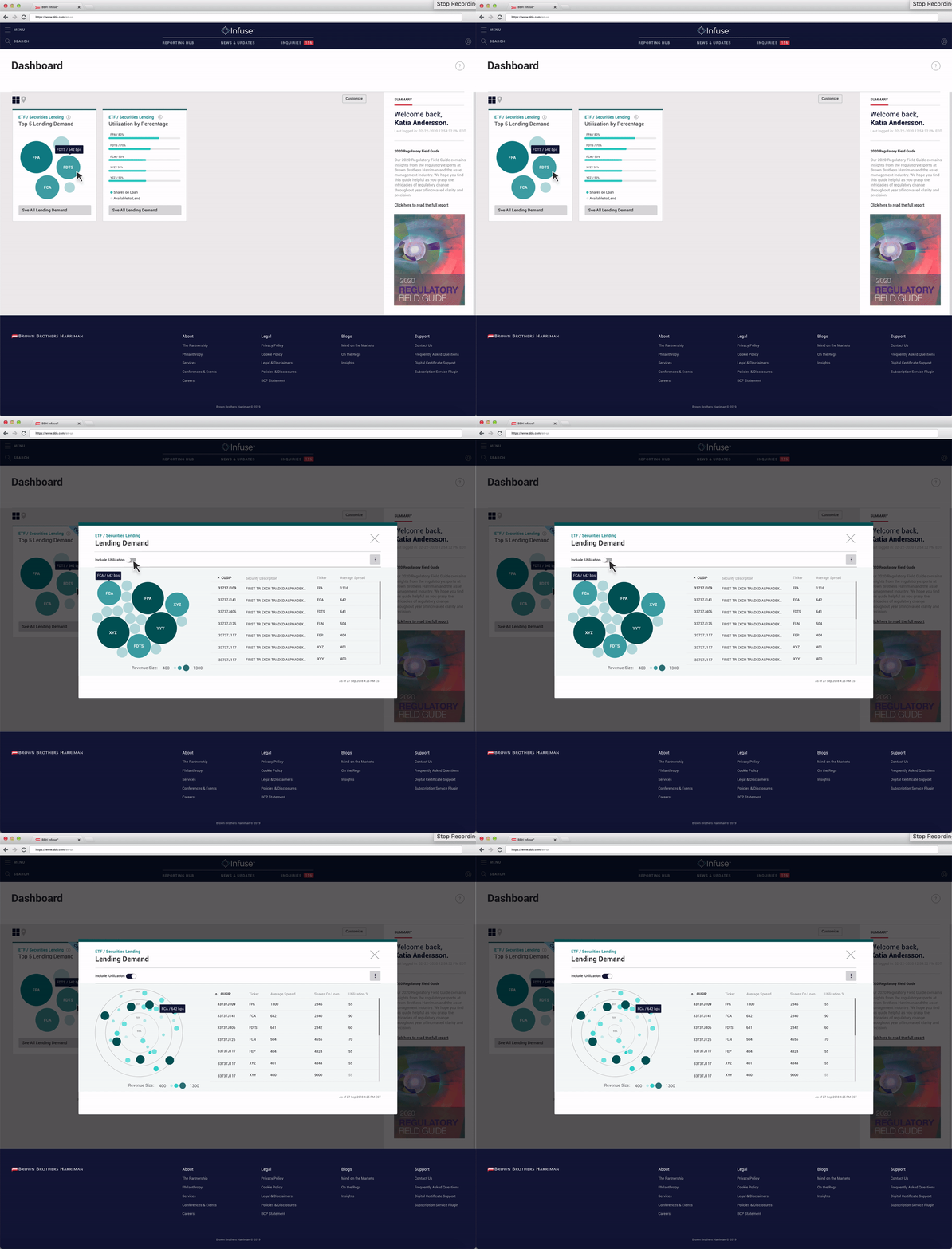
KEY CHALLENGES AND DECISIONS
REDESIGNING A DATA-DRIVEN DASHBOARD FOR REAL ESTATE OPERATIONS
Redesigned a CRM dashboard to help land investment teams monitor performance, track transactions, and make faster operational decisions based on clearer business insights. Pebble is a SaaS CRM platform used by land investment companies across the United States. As the product grew, the dashboard became one of the key areas where users needed clearer visibility into operational performance, transaction progress, and campaign outcomes. My role was to research user needs, identify reporting gaps, and redesign the dashboard into a more actionable workspace for daily decision-making.
Year
2023-2026
Field
Real Estate
Client :
PebbleRei
Category
Product Design
THE CHALLENGE
The existing dashboard was underused because it did not clearly support users' day-to-day decision-making. Key information was difficult to scan, important metrics were missing, and many teams still relied on external spreadsheets to monitor performance and transactions.
The challenge was to understand what information users actually needed and turn the dashboard into a more useful operational workspace.
Dashboard Research & Discovery
To define the redesign direction, I analyzed user feedback, reviewed spreadsheet-based reporting habits, and mapped recurring dashboard needs shared by different teams.
The research helped identify which metrics were truly useful, which information was missing, and how users expected to monitor performance inside the product instead of switching between external tools.
KEY FINDINGS:
Important transaction data was difficult to monitor from the existing dashboard.
The previous dashboard lacked prioritization and clear information hierarchy.
Different teams needed visibility into campaign performance, calls, deals, revenue, and ROI.
Users wanted faster access to actionable insights rather than passive reporting.
Over three years, I led or contributed to multiple initiatives designed to improve operational efficiency and product adoption.
Dashboard Redesign
Transformed reporting views into actionable operational workspaces with clearer prioritization and visibility.
Workflow Optimization
Reduced friction across acquisition and transaction management processes.
Onboarding Improvements
Designed guided experiences helping new users reach value faster.
Automation Features
Introduced tools that reduced repetitive manual work and improved operational consistency.
AI-Powered Experiences
Explored conversational AI and workflow automation opportunities within the platform.
DASHBOARD REDESIGN
Based on research findings, I redesigned the dashboard around the most important operational questions users needed to answer daily: how campaigns were performing, how many deals were moving through the pipeline, which transactions required attention, and whether business activity was generating return on investment.
The new structure grouped related information into clearer sections and made the dashboard more useful for monitoring, prioritization, and decision-making.
BEFORE vs AFTER STATE
Challenge | Design Decision |
|---|---|
Information overload | Simplified hierarchy and surfaced key metrics |
Poor visibility | Introduced actionable tracking mechanisms |
Manual monitoring | Added workflow-oriented reporting |
Multiple user needs | Created flexible dashboard structures |
IMPACT
The success was measured through adoption: redesigns improved usability, reduced friction across key workflows, and created a stronger foundation for future product growth.
KEY PRODUCT INITIATIVES - BROADER CONTEXT
Over three years, I led or contributed to multiple initiatives designed to improve operational efficiency and product adoption.
Dashboard Redesign
Transformed reporting views into actionable operational workspaces with clearer prioritization and visibility.
Workflow Optimization
Reduced friction across acquisition and transaction management processes.
Onboarding Improvements
Designed guided experiences helping new users reach value faster.
Automation Features
Introduced tools that reduced repetitive manual work and improved operational consistency.
AI-Powered Experiences
Explored conversational AI and workflow automation opportunities within the platform.
DASHBOARD REDESIGN
Based on research findings, I redesigned the dashboard around the most important operational questions users needed to answer daily: how campaigns were performing, how many deals were moving through the pipeline, which transactions required attention, and whether business activity was generating return on investment.
The new structure grouped related information into clearer sections and made the dashboard more useful for monitoring, prioritization, and decision-making.
BEFORE vs AFTER STATE
Challenge | Design Decision |
|---|---|
Information overload | Simplified hierarchy and surfaced key metrics |
Poor visibility | Introduced actionable tracking mechanisms |
Manual monitoring | Added workflow-oriented reporting |
Multiple user needs | Created flexible dashboard structures |
IMPACT
The success was measured through adoption: redesigns improved usability, reduced friction across key workflows, and created a stronger foundation for future product growth.
More Projects
More Projects
KEY CHALLENGES AND DECISIONS
REDESIGNING A DATA-DRIVEN DASHBOARD FOR REAL ESTATE OPERATIONS
Redesigned a CRM dashboard to help land investment teams monitor performance, track transactions, and make faster operational decisions based on clearer business insights. Pebble is a SaaS CRM platform used by land investment companies across the United States. As the product grew, the dashboard became one of the key areas where users needed clearer visibility into operational performance, transaction progress, and campaign outcomes. My role was to research user needs, identify reporting gaps, and redesign the dashboard into a more actionable workspace for daily decision-making.
Year
2023-2026
Field
Real Estate
Client :
PebbleRei
Category
Product Design
THE CHALLENGE
The existing dashboard was underused because it did not clearly support users' day-to-day decision-making. Key information was difficult to scan, important metrics were missing, and many teams still relied on external spreadsheets to monitor performance and transactions.
The challenge was to understand what information users actually needed and turn the dashboard into a more useful operational workspace.
Dashboard Research & Discovery
To define the redesign direction, I analyzed user feedback, reviewed spreadsheet-based reporting habits, and mapped recurring dashboard needs shared by different teams.
The research helped identify which metrics were truly useful, which information was missing, and how users expected to monitor performance inside the product instead of switching between external tools.
KEY FINDINGS:
Important transaction data was difficult to monitor from the existing dashboard.
The previous dashboard lacked prioritization and clear information hierarchy.
Different teams needed visibility into campaign performance, calls, deals, revenue, and ROI.
Users wanted faster access to actionable insights rather than passive reporting.
Over three years, I led or contributed to multiple initiatives designed to improve operational efficiency and product adoption.
Dashboard Redesign
Transformed reporting views into actionable operational workspaces with clearer prioritization and visibility.
Workflow Optimization
Reduced friction across acquisition and transaction management processes.
Onboarding Improvements
Designed guided experiences helping new users reach value faster.
Automation Features
Introduced tools that reduced repetitive manual work and improved operational consistency.
AI-Powered Experiences
Explored conversational AI and workflow automation opportunities within the platform.
DASHBOARD REDESIGN
Based on research findings, I redesigned the dashboard around the most important operational questions users needed to answer daily: how campaigns were performing, how many deals were moving through the pipeline, which transactions required attention, and whether business activity was generating return on investment.
The new structure grouped related information into clearer sections and made the dashboard more useful for monitoring, prioritization, and decision-making.
BEFORE vs AFTER STATE
Challenge | Design Decision |
|---|---|
Information overload | Simplified hierarchy and surfaced key metrics |
Poor visibility | Introduced actionable tracking mechanisms |
Manual monitoring | Added workflow-oriented reporting |
Multiple user needs | Created flexible dashboard structures |
IMPACT
The success was measured through adoption: redesigns improved usability, reduced friction across key workflows, and created a stronger foundation for future product growth.
KEY PRODUCT INITIATIVES - BROADER CONTEXT
Over three years, I led or contributed to multiple initiatives designed to improve operational efficiency and product adoption.
Dashboard Redesign
Transformed reporting views into actionable operational workspaces with clearer prioritization and visibility.
Workflow Optimization
Reduced friction across acquisition and transaction management processes.
Onboarding Improvements
Designed guided experiences helping new users reach value faster.
Automation Features
Introduced tools that reduced repetitive manual work and improved operational consistency.
AI-Powered Experiences
Explored conversational AI and workflow automation opportunities within the platform.
DASHBOARD REDESIGN
Based on research findings, I redesigned the dashboard around the most important operational questions users needed to answer daily: how campaigns were performing, how many deals were moving through the pipeline, which transactions required attention, and whether business activity was generating return on investment.
The new structure grouped related information into clearer sections and made the dashboard more useful for monitoring, prioritization, and decision-making.
BEFORE vs AFTER STATE
Challenge | Design Decision |
|---|---|
Information overload | Simplified hierarchy and surfaced key metrics |
Poor visibility | Introduced actionable tracking mechanisms |
Manual monitoring | Added workflow-oriented reporting |
Multiple user needs | Created flexible dashboard structures |
IMPACT
The success was measured through adoption: redesigns improved usability, reduced friction across key workflows, and created a stronger foundation for future product growth.